
Skateboard Deck Art Through the Decades
Skateboard deck art has evolved from simple brand logos into a recognised form of illustration, street culture and collectible design. From hand-drawn graphics of the 1970s and colourful artwork of the 1980s to rebellious designs of the 1990s and modern artist collaborations, every decade reflects a different stage of skateboarding history.
This guide explores deck graphics history, vintage skateboard art, influential artists, changing design styles and why skateboard deck art matters to riders, collectors and art enthusiasts.
What Does Skateboard Deck Art Mean?
Skateboard deck art refers to illustrations, patterns, logos, lettering and printed designs displayed on a skateboard deck. It transforms the underside of a functional wooden board into a visual expression of identity, creativity and skateboarding culture.
Early skateboard graphics were relatively simple, but artists gradually introduced detailed illustrations, cartoon characters, surreal imagery, political references and street art influences. These designs helped companies establish recognisable identities while giving riders a way to express their personalities.
Skateboard deck art also documents the development of skateboarding. A vintage deck can reveal the artistic styles, brand identities and cultural attitudes associated with the period in which it was produced.
The 1960s: Before Skateboard Graphics Became Popular
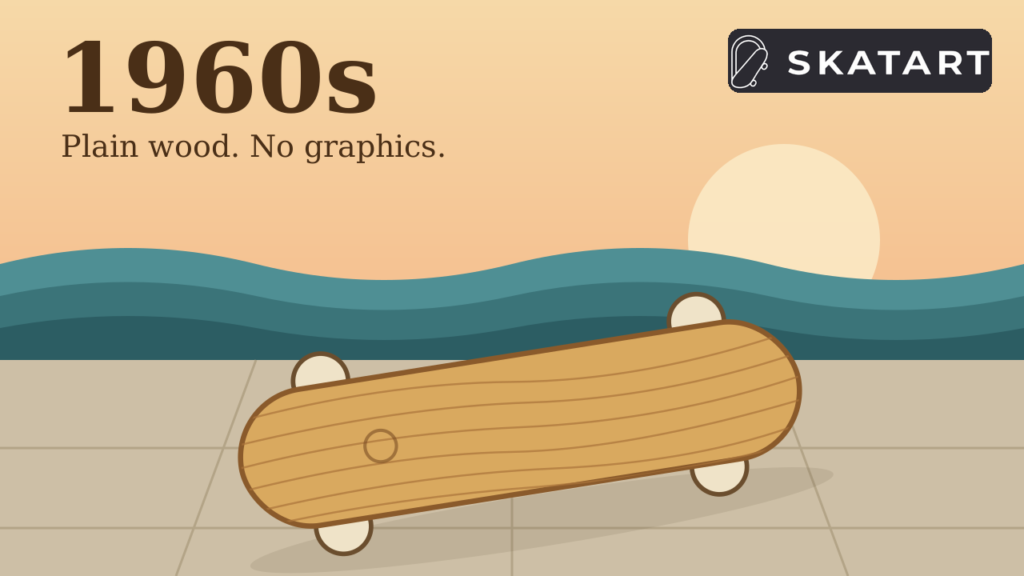
Skateboards in the 1960s generally featured plain wooden surfaces, simple colours or basic manufacturer markings. Boards were primarily designed for riding, and detailed deck graphics had not yet become an important part of product identity.
Skateboarding developed partly from surf culture in California, where riders wanted an activity when ocean conditions were unsuitable for surfing. Early boards were simple, and their appearance received less attention than their construction and riding function.
As skateboard manufacturing developed, companies began using logos and basic printed designs to distinguish their products. However, the underside of a skateboard had not yet become the illustrated canvas seen in later decades.
The introduction of polyurethane wheels in the early 1970s improved grip and rolling performance, helping skateboarding grow. This renewed interest created opportunities for companies and artists to develop stronger visual identities.
The 1970s: The Beginning of Skateboard Deck Art
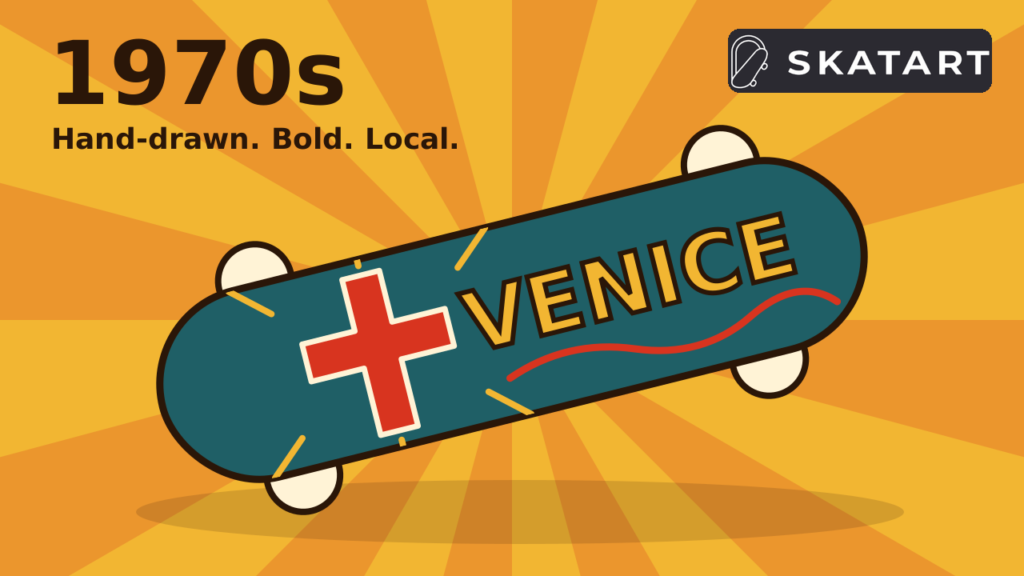
The 1970s established the foundation of modern skateboard deck art through hand-drawn illustrations, bold lettering and distinctive brand graphics. Artists started treating the underside of a skateboard as a surface for original artwork rather than a place for a simple company logo.
Wes Humpston and Jim Muir, associated with Dogtown Skates, played an important role in this development. Their Dogtown graphics included the recognisable cross design and hand-drawn lettering connected with the Venice and Santa Monica skate scene.
These early designs reflected the rebellious character of skateboarding communities. The artwork looked different from conventional sporting equipment because it borrowed visual ideas from surf culture, underground illustration and local street identity.
As more manufacturers entered the market, original illustrations helped boards develop recognisable personalities. Three characteristics defined much of the decade’s artwork:
- Hand-drawn illustrations: Artists created distinctive graphics using traditional drawing techniques.
- Bold lettering: Brand names and decorative text became important visual elements.
- Local identity: Designs reflected California surf culture and emerging skateboarding communities.
The 1970s established an important principle: skateboard artwork could communicate the identity of both the rider and the company.
The 1980s: The Golden Era of Skateboard Graphics
The 1980s became one of the most influential periods in skateboard graphic history because detailed illustrations and recognisable artist styles became central to skateboard branding. Companies used expressive characters, dramatic colours and unusual compositions to make professional rider decks instantly recognisable.
Two artists strongly associated with this era were Vernon Courtlandt Johnson, known as VCJ, and Jim Phillips.
Powell-Peralta and Vernon Courtlandt Johnson
Vernon Courtlandt Johnson created memorable graphics for Powell-Peralta, including skulls, skeletons, dragons and other dramatic illustrations. His artwork helped establish the company’s visual identity and gave professional skateboarders distinctive pro-model designs.
The Bones Brigade era increased the visibility of pro-model graphics. Riders could identify boards through their artwork, names and illustrations, making deck graphics an important part of skateboarding culture.
Santa Cruz and Jim Phillips
Jim Phillips became closely associated with Santa Cruz through colourful, expressive artwork. His designs included exaggerated characters, monster imagery and energetic compositions influenced by comic books, hot-rod illustration and psychedelic art.
His Screaming Hand graphic, created in 1985, became one of the most recognised images in skateboarding. Its unusual shape and expressive appearance demonstrated how one illustration could become a lasting cultural symbol.
The 1980s strengthened connections between skateboard graphics, music, fashion and youth identity. Artwork was no longer limited to product decoration; it became part of skateboarding’s visual language.
The 1990s: Street Culture and Rebellious Graphics
The 1990s brought a more provocative and experimental direction to skateboard deck art as street skating gained popularity. Graphics increasingly reflected graffiti, underground comics, humour, social commentary and alternative youth culture.
Companies such as World Industries became known for controversial and humorous illustrations. Artist Marc McKee developed graphics that challenged conventional advertising through parody, exaggerated characters and unusual subject matter.
The decade also introduced varied design approaches. Some decks featured detailed illustrations, while others used minimal lettering, simple symbols or photography-inspired artwork.
Girl Skateboards, founded in 1993, became associated with a different visual direction through distinctive branding and creative collaborations. The changing design language showed that skateboard graphics did not need to follow one artistic formula.
Three trends influenced the decade:
- Street art influence: Graffiti lettering and urban imagery became more visible.
- Alternative humour: Satirical illustrations challenged traditional sporting graphics.
- Minimal design: Simple logos, typography and restrained compositions gained attention.
The 1990s strengthened the connection between skateboarding and independent creative culture. Deck graphics reflected riders’ individuality rather than conventional sports branding.
The 2000s: Artist Collaborations and Collectible Decks
The 2000s expanded skateboard deck art through collaborations with illustrators, designers, musicians and visual artists. Skateboard companies increasingly treated selected decks as limited creative releases rather than ordinary riding equipment.
Artists brought different techniques to skateboard surfaces, including painting, photography, collage, typography and digital illustration. These collaborations introduced skateboard graphics to audiences beyond skate shops.
Online communities made it easier for collectors to discover older designs and compare artwork from different periods. Vintage skateboard art gained attention because original decks preserved the visual identity of earlier skateboarding generations.
Some collectors focused on professional rider models, while others preferred rare graphics, unusual shapes and limited production runs. Condition became important because riding damages a deck through scratches, slides and impacts.
The decade helped establish skateboard decks as display objects and creative editions alongside their original sporting purpose.
The 2010s: Digital Design and Contemporary Art
The 2010s introduced greater flexibility in skateboard graphic production through digital illustration, improved printing methods and online design platforms. Artists could experiment with detailed colours, layered compositions and photographic elements more easily.
Social media changed how skateboard artwork reached audiences. Designers, independent brands and professional riders could share new graphics directly with followers, creating interest before a deck reached retail stores.
Street art remained an important influence, alongside contemporary illustration, pop culture, abstract design and digital graphics. Some artists used decks as compact canvases for visual stories, while others preferred repeated patterns or minimal compositions.
Limited-edition releases became more visible within skateboarding and contemporary art communities. Collectors looked for artist signatures, release information, original packaging and distinctive designs when evaluating a deck.
The decade demonstrated that skateboard deck art could connect sporting culture with wider creative industries.
The 2020s: Skateboard Deck Art as Collectible Wall Art
The 2020s have strengthened the position of skateboard deck art as both riding-related design and wall decoration. Galleries, museums, independent artists and skateboard brands continue to present decks as examples of visual culture and creative expression.
The Design Museum’s skateboard exhibition in London presented the development of skateboard design from the 1950s to the present, showing how artwork, hardware and riding culture evolved together. Museum exhibitions help audiences understand skateboard decks as objects with historical and artistic value.
Digital printing and custom production allow creators to experiment with original artwork, personalised designs and small releases. Modern graphics include abstract patterns, illustrated characters, typography, photography and references to earlier skateboarding eras.
Collectors and interior design enthusiasts also use decks as wall displays. A mounted skateboard can add colour, personality and cultural character to a bedroom, studio, office or creative space.
Modern skateboard deck art connects three areas:
- Skateboarding heritage: Designs preserve the visual history of brands, riders and communities.
- Contemporary creativity: Artists explore new techniques, themes and visual styles.
- Collectible design: Limited releases and original artwork attract collectors and display enthusiasts.
What Makes Vintage Skateboard Art Collectible?
Vintage skateboard art becomes collectible through its rarity, historical importance, artist recognition, condition and connection with influential skateboarding periods. A rare professional model with original graphics generally attracts more collector interest than an ordinary mass-produced deck.
Collectors commonly evaluate five factors:
- Originality: Original graphics and authentic production details support historical value.
- Condition: Unused or carefully preserved decks retain more of their original appearance.
- Artist recognition: Artwork by influential designers attracts interest from skateboarding and art communities.
- Production quantity: Limited releases and discontinued designs can become harder to find.
- Historical relevance: Decks connected with important riders, brands or periods carry cultural significance.
A deck’s age alone does not determine its value. Reproductions, restored boards and heavily damaged originals require careful evaluation before purchase.
Collectors should check manufacturer markings, graphic details, deck construction and seller information. Originality and condition matter more than simply describing a board as vintage.
Why Does Skateboard Deck Art Matter?
Skateboard deck art matters because it connects visual creativity with skateboarding identity, history and community. It gives riders a way to express personal interests while helping companies and artists communicate through recognisable designs.
Graphics also preserve cultural changes. The monster illustrations of the 1980s, rebellious street graphics of the 1990s and digital artwork of the 2020s reflect different creative influences.
For artists, skateboard decks provide an unusual canvas with a distinctive shape and connection to youth culture. For collectors, they preserve important designs and memories from skateboarding history.
For homeowners and design enthusiasts, skateboard wall art offers an alternative to traditional framed prints. A deck can display an illustration while adding a connection to skateboarding culture.
How to Choose Skateboard Deck Art for Your Space
Choose skateboard deck art according to design style, available wall space, colour scheme and personal interests. A vintage graphic creates a different atmosphere from a minimal modern illustration or a bright contemporary design.
Consider four points before selecting a deck:
- Design theme: Choose vintage graphics, street art, typography or abstract illustrations.
- Colour combination: Match the deck artwork with the room’s existing colours.
- Display position: Select a wall with enough space to show the deck clearly.
- Artwork preference: Choose an illustration that reflects your interests rather than following a temporary trend.
A single deck can create a focused display, while a collection of three or more boards can form a feature wall. Use suitable wall mounts and follow the manufacturer’s installation instructions to keep the display secure.
Explore the Story Behind Skateboard Deck Art
Skateboard deck art has travelled from simple logos to detailed illustrations, independent artist collaborations and collectible wall displays. Each decade introduced new visual influences while preserving the connection between creativity and skateboarding culture.
Explore the Skateboard Art to discover more about the artists, styles and history behind deck graphics. Visit the Skateboard Wall Art to find designs that bring skateboarding culture into your space, and read The Story to understand the ideas and creative influences behind the collection.

2 Responses