
Skateboard Art Styles Explained: Graffiti, Pop, Surf and Neon
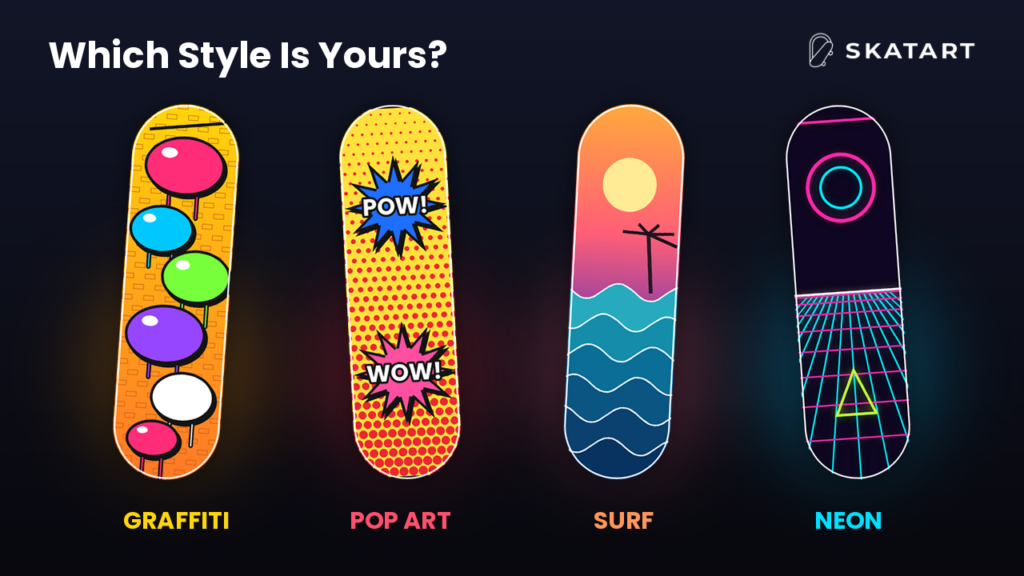
Skateboard art styles transform ordinary skateboard decks into creative expressions of street culture, personal identity and contemporary design. The four popular skateboard art styles include graffiti, pop art, surf-inspired illustrations and neon graphics, each offering a different visual character.
Graffiti skateboard art reflects urban subculture, pop art skateboard designs use familiar cultural references, surf graphics bring coastal creativity, and neon deck design creates bold futuristic appearances.
Understanding these styles helps skaters, collectors and art enthusiasts choose decks that match their interests and interiors.
What Do Skateboard Art Styles Mean?
Skateboard art styles are visual approaches used by graphic artists to decorate skateboard decks through illustrations, typography, colours, patterns and cultural references.
A skateboard deck provides a distinctive canvas because its curved shape, wooden surface and compact dimensions influence how artwork appears. Designers use the available space to communicate ideas, represent skateboarding communities and create recognisable visual identities.
The main skateboard art styles include:
- Graffiti: Street lettering, spray-paint effects and expressive illustrations.
- Pop art: Comic-inspired graphics, bold colours and popular culture references.
- Surf art: Ocean landscapes, coastal illustrations and wave-inspired patterns.
- Neon art: Fluorescent colours, glowing effects and futuristic compositions.
Each style has its own visual language. Some focus on urban expression, while others use nature, entertainment or experimental colour combinations.
Why Do Skateboard Art Styles Matter?
Skateboard art styles matter because deck graphics connect skateboarding equipment with personal identity, creative expression and the wider skateboarding subculture.
Skateboarding has developed alongside street art, punk music, surfing, fashion and independent graphic design. Deck graphics became an important part of this culture as manufacturers and artists started using skateboard surfaces for distinctive illustrations and branding.
Artwork influences a skateboard in four important ways.
1. Personal expression: Riders select graphics that reflect their interests, personality and creative preferences.
2. Cultural identity: Designs communicate connections with graffiti, music, street fashion and other creative communities.
3. Visual appeal: Colours, typography and illustrations make individual decks visually recognisable.
4. Collectibility: Limited-edition graphics and artist collaborations attract collectors who appreciate the artwork, production history and edition details.
A skateboard graphic is not simply decoration. It represents the relationship between skateboarding and visual culture.
Graffiti Skateboard Art: The Language of Street Culture
Graffiti skateboard art uses expressive lettering, spray-paint effects, bold outlines and urban illustrations inspired by street culture.
This style draws from graffiti writing, mural painting and independent street-art movements. Its visual identity often includes layered colours, handwritten typography, abstract characters and deliberately rough textures.
What Makes Graffiti Skateboard Art Different?
Graffiti artwork stands out through its energetic composition and distinctive lettering.
Common design elements include:
- Bubble lettering: Rounded letters with thick outlines and colourful fills.
- Wildstyle typography: Interconnected letters with complex shapes and overlapping details.
- Spray-paint textures: Uneven colour application, paint drips and rough edges.
- Character illustrations: Cartoon figures, expressive faces and imaginary characters.
- Urban backgrounds: Brick patterns, concrete textures and layered visual elements.
These elements create a street-inspired appearance that connects skateboard graphics with urban creative communities.
Who Should Choose Graffiti Skateboard Designs?
Graffiti skateboard designs suit riders, artists and collectors who enjoy expressive artwork and urban aesthetics.
They work particularly well for:
- Skaters interested in street culture.
- Collectors who appreciate underground artwork.
- People who prefer colourful and unconventional designs.
- Interior spaces featuring industrial or urban decoration.
A graffiti deck also works as a wall display because its lettering and colour combinations create a strong visual focal point.
Pop Art Skateboard: Popular Culture Meets Deck Design
A pop art skateboard combines familiar cultural imagery, bold colours, simplified illustrations and graphic compositions inspired by popular art movements.
Pop art developed during the 1950s and 1960s, drawing inspiration from advertising, consumer products, comics and mass media. Its visual approach later influenced fashion, merchandise, illustrations and skateboard graphics.
What Are the Main Features of Pop Art Skateboards?
Pop art skateboard designs use recognisable imagery and strong colour contrasts to create visually engaging compositions.
Five common design elements define this style:
1. Comic illustrations: Speech bubbles, expressive characters and action-inspired graphics.
2. Bold colour combinations: Bright red, yellow, blue and contrasting black outlines.
3. Repeated patterns: Multiple versions of the same image arranged in a structured composition.
4. Halftone textures: Small dots that recreate the appearance of traditional printed comic illustrations.
5. Cultural references: Familiar objects, entertainment themes and everyday consumer imagery.
These techniques create a playful appearance that makes pop art suitable for both skateboard decks and decorative displays.
Why Is Pop Art Popular in Skateboard Graphics?
Pop art is popular because its recognisable imagery and strong colours make skateboard designs easy to notice.
Graphic artists use simplified illustrations to communicate ideas without requiring complicated visual explanations. Repeated patterns and comic-inspired compositions also create a strong connection between skateboard artwork and contemporary popular culture.
A pop art skateboard suits people who enjoy colourful interiors, graphic posters, comic illustrations and statement artwork.
Surf Skateboard Art: Inspired by Ocean and Coastal Culture
Surf skateboard art uses ocean imagery, wave patterns, tropical landscapes and coastal illustrations inspired by surfing culture.
Skateboarding developed partly from California’s surfing communities, where early riders looked for ways to recreate surfing movements on land. This connection influenced skateboard design, clothing, music and deck graphics.
What Defines Surf-Inspired Skateboard Art?
Surf-inspired skateboard graphics focus on natural movement, relaxed colour palettes and coastal imagery.
Popular design elements include:
- Ocean waves: Curved water patterns and rolling wave illustrations.
- Sunset gradients: Combinations of orange, pink, purple and yellow.
- Tropical scenery: Palm trees, beaches and island landscapes.
- Marine illustrations: Surfboards, sea creatures and coastal wildlife.
- Retro typography: Rounded lettering inspired by vintage surf posters.
These elements create a relaxed visual identity that connects skateboard artwork with beach culture.
Who Should Choose Surf Skateboard Graphics?
Surf skateboard graphics suit people who appreciate coastal lifestyles, nature-inspired illustrations and vintage California aesthetics.
They are particularly suitable for:
- Cruising skateboard enthusiasts.
- Surfing and beach culture followers.
- Collectors interested in retro graphics.
- Homes with coastal, bohemian or relaxed interior themes.
A surf-inspired deck also complements light-coloured interiors because its natural imagery and warm gradients create a balanced decorative appearance.
Neon Deck Design: Bright Colours and Futuristic Graphics
Neon deck design uses intense fluorescent colours, glowing outlines, high-contrast backgrounds and futuristic illustrations to create an energetic skateboard appearance.
Unlike traditional graphic styles that rely on natural imagery or hand-drawn lettering, neon artwork focuses on colour intensity and visual contrast.
What Are the Key Features of Neon Deck Design?
Neon graphics combine five important visual techniques.
1. Fluorescent colours: Bright pink, electric blue, lime green and vivid orange.
2. Glow effects: Bright outlines that create the appearance of illuminated objects.
3. Geometric patterns: Repeating shapes, grids and angular compositions.
4. Futuristic typography: Digital lettering and technology-inspired fonts.
5. Dark backgrounds: Black, navy and deep purple surfaces that increase colour contrast.
These techniques create a distinctive appearance influenced by electronic music posters, arcade graphics and futuristic digital design.
Who Should Choose Neon Skateboard Art?
Neon skateboard art suits riders and collectors who prefer modern, high-contrast artwork.
It works particularly well for gaming rooms, contemporary bedrooms, creative studios and entertainment spaces.
A neon deck design also creates an effective statement piece when displayed against a dark or neutral-coloured wall.
Graffiti vs Pop Art vs Surf vs Neon: Which Style Is Right?
The four skateboard art styles differ in their visual themes, colour combinations and cultural influences.
The following comparison helps you identify the right design for your preferences.
| Art Style | Main Inspiration | Common Colours | Visual Character |
|---|---|---|---|
| Graffiti | Street culture and murals | Red, black, yellow and blue | Expressive and urban |
| Pop art | Comics and popular culture | Red, yellow, blue and pink | Playful and graphic |
| Surf art | Ocean and coastal lifestyle | Blue, turquoise, orange and beige | Relaxed and natural |
| Neon art | Digital and futuristic design | Fluorescent pink, green and blue | Bright and energetic |
Choose graffiti for street-inspired expression, pop art for playful illustrations, surf art for coastal themes and neon for futuristic colour combinations.
Your preferred style also depends on where you intend to use the skateboard. A deck designed for riding and a deck intended for wall display can serve different creative purposes.
How Are Skateboard Artworks Created?
Skateboard artworks are created through illustration, digital design, painting and printing techniques that transfer images onto deck surfaces.
The production process depends on the artwork, deck material, manufacturing requirements and desired finish.
Hand-Painted Skateboard Graphics
Hand-painted skateboard graphics use physical painting techniques to apply artwork directly to a deck.
Artists work with acrylic paints, paint markers, brushes and other suitable materials to create original illustrations.
This approach offers individual details, visible brush textures and a handmade appearance. Each painted deck can have slight differences, making the artwork distinctive.
Screen Printing
Screen printing transfers ink through a prepared mesh screen onto the printing surface.
Different screens can be used for separate colours, allowing manufacturers to produce consistent graphics across multiple decks.
This print technique is particularly useful for bold illustrations, logos and designs with defined colour areas.
Digital Printing
Digital printing uses electronic artwork files to reproduce detailed images on suitable deck surfaces or transfer materials.
It supports gradients, photographs, intricate illustrations and complex colour combinations.
Designers can also prepare custom graphics digitally before sending them for production.
Heat Transfer Printing
Heat transfer printing uses controlled heat and pressure to transfer prepared graphics onto a surface.
The method allows detailed artwork to be applied to skateboard decks, depending on the transfer material and manufacturing process.
The final finish depends on the ink, surface preparation and protective coating.
What Makes a Skateboard Graphic Collectible?
A skateboard graphic becomes collectible through its artistic value, edition size, creator recognition, historical relevance and physical condition.
Collectors evaluate more than the appearance of a design. They also consider the story behind its creation and the availability of the particular release.
Five factors influence collectibility.
1. Artist recognition: Artwork created by established or influential graphic artists attracts interest from collectors.
2. Limited production: Clearly documented limited editions have defined availability.
3. Originality: Distinctive illustrations and unusual design concepts create stronger artistic identities.
4. Condition: Unused decks with undamaged graphics generally retain their original appearance better than heavily ridden boards.
5. Cultural relevance: Designs connected with important skateboarding movements, artists or historical periods carry additional significance.
Limited production does not automatically guarantee financial value. Collectors also consider authenticity, demand, condition and release history.
How to Choose Skateboard Art for Wall Decoration
The right skateboard artwork for wall decoration depends on colour, room size, interior theme and the visual effect you want to create.
A deck can work as an individual statement piece or as part of a larger skateboard wall art arrangement.
Use these five considerations when selecting artwork.
- Match the interior colours: Choose artwork that complements existing furniture, wall colours and decorative accessories.
- Consider the display space: Large walls accommodate multiple decks, while smaller areas suit individual statement pieces.
- Choose a visual theme: Combine graffiti, pop art, surf or neon graphics according to your preferred interior style.
- Compare deck arrangements: Horizontal rows, vertical displays and symmetrical grids create different visual effects.
- Check the artwork finish: Review colour quality, printing details and surface condition before purchasing.
For example, a neon deck creates contrast in a dark entertainment room, while a surf-inspired design complements a bright living room.
Why Are Custom Skateboard Graphics Becoming Popular?
Custom skateboard graphics are popular because they allow riders and collectors to express individual interests through original illustrations, colours and visual concepts.
Custom designs also provide creative freedom beyond standard manufacturer graphics.
A personalised deck can feature:
- Original illustrations created by independent artists.
- Custom lettering and typography.
- Personal colour combinations.
- Abstract patterns and geometric artwork.
- Cultural references and themed compositions.
Custom artwork connects the physical skateboard with the owner’s creative identity. It also gives designers more opportunities to experiment with different illustration styles and printing techniques.
Where Can You Explore Skateboard Art and Deck Designs?
SKATART brings skateboard culture and creative deck artwork together through distinctive skateboard-inspired designs and decorative collections.
Explore the Skateboard Art Collection to discover creative deck designs, or browse Skateboard Wall Art for skateboard-inspired decorative pieces.
You can also explore The Story to learn more about the creative identity behind SKATART.
Shop this month’s skateboard wall art drop through the SKATART Wall Art Collection and discover artwork that brings skateboarding culture into your space.
Final Thoughts on Skateboard Art Styles
Skateboard art styles represent the creative connection between skateboarding, street culture and contemporary visual design. Graffiti celebrates urban expression, pop art brings popular culture onto deck surfaces, surf graphics reflect coastal influences, and neon artwork introduces futuristic colour combinations.
Each style offers a different way to communicate personality and artistic interests. Whether you collect limited-edition decks, ride custom boards or decorate your home with skateboard wall art, understanding these four styles helps you recognise the design elements that make each skateboard graphic distinctive.
