
Skateboard Art: How a Deck Became a Canvas Worth Collecting
Skateboard art transforms an ordinary wooden deck into a canvas representing creativity, identity and skateboarding history. From hand-drawn illustrations in the 1970s to detailed graphics created by professional artists, skateboard artwork has become an important part of skate culture.
Today, collectors, skaters and art enthusiasts value these designs for their originality, cultural significance and visual appeal. Understanding how skateboard graphics evolved explains why certain decks have become collectible pieces of contemporary art.
What Is Skateboard Art?
Skateboard art is artwork printed, painted or illustrated on skateboard decks to express personal identity, artistic style and skateboarding culture. It combines graphic design, illustration, street art and commercial creativity on a functional wooden surface.
Unlike traditional paintings, skateboard artwork appears on a curved maple deck designed for movement and physical use. Artists work within limited dimensions to create distinctive compositions.
Popular skateboard art styles include:
- Illustration: Hand-drawn characters, monsters, skulls and imaginative figures.
- Typography: Bold lettering, brand names, slogans and experimental fonts.
- Street art: Graffiti-inspired lettering, urban imagery and expressive patterns.
- Abstract artwork: Geometric shapes, unusual colour combinations and experimental compositions.
- Photographic graphics: Images of skaters, landscapes and cultural references.
These styles make every deck visually distinctive. Skateboard graphics communicate the personality and creative direction of the artists, riders and brands behind them.
How Skateboard Decks Became Artistic Canvases
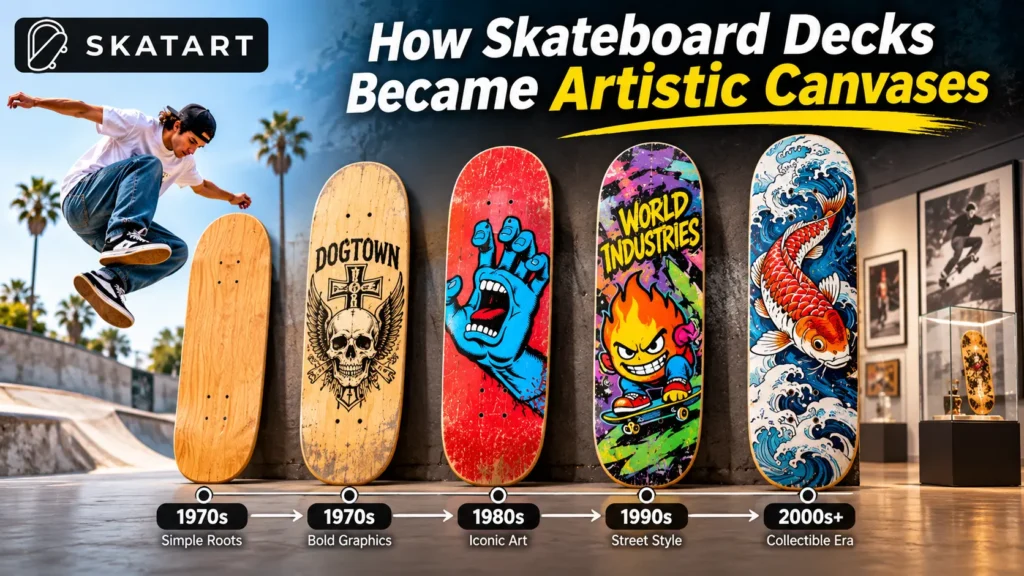
Skateboard decks became artistic canvases during the development of modern skateboarding in California, particularly during the 1970s. Early boards generally featured simple wooden surfaces, basic branding or minimal decoration.
As skateboarding expanded, manufacturers recognised the visual potential of the deck’s underside. Graphics became another way for riders to express their identities and distinguish their equipment.
The 1970s: The Beginning of Skateboard Graphics
The late 1970s introduced some of the earliest recognisable skateboard deck graphics. Artists such as Wes Humpston helped establish visual identities for skateboard brands through hand-drawn illustrations.
His work for Dogtown Skateboards demonstrated how an ordinary deck could carry original artwork. These designs connected skateboarding with independent visual expression.
The 1980s: The Golden Era of Skateboard Art
The 1980s established skateboard artwork as a recognisable commercial art form. Manufacturers collaborated with professional graphic artists to create memorable illustrations.
Two influential brands shaped this period:
- Powell-Peralta: Developed distinctive graphics associated with Vernon Courtlandt Johnson, also known as VCJ.
- Santa Cruz: Became famous for Jim Phillips’ expressive illustrations and memorable designs.
Jim Phillips created the Screaming Hand graphic in 1985. Its exaggerated illustration, bold outlines and expressive appearance made it one of skateboarding’s most recognisable images.
The 1990s: Street Art and Alternative Graphics
The 1990s introduced experimental approaches to skateboard art. Graphics increasingly reflected underground music, graffiti, independent illustration, humour and social commentary.
Companies such as World Industries popularised playful and provocative visual identities. Artists experimented with unconventional characters, distorted typography and unusual compositions.
Skateboard graphics became a way to communicate opinions and represent the independent spirit of skate culture.
The 2000s to Today: Skateboard Art Becomes Collectible
During the 2000s, skateboard artwork expanded beyond sporting communities. Artists collaborated with fashion brands, galleries, independent designers and cultural organisations.
Limited-edition releases, artist collaborations and anniversary collections increased interest in collecting graphic decks.
Museums also began recognising skateboarding’s artistic contribution. The Mint Museum’s 2025 exhibition, Central Impact: Skateboarding’s Art and Influence, featured rare boards, original artwork and archival material.
This recognition demonstrates how skateboard decks preserve artistic and cultural history.
Why Skateboard Art Matters in Skate Culture
Skateboard art connects personal expression, brand identity and skateboarding history through visual design. Graphics help riders communicate their interests and distinguish their equipment.
Four factors explain its cultural importance.
Personal Identity and Self-Expression
Skateboard graphics allow riders to display their personalities through visual choices. Some prefer dark illustrations featuring skulls, while others choose colourful characters, abstract patterns or minimalist designs.
The deck becomes a personal statement that communicates individual taste.
Connection with Skateboarding History
Classic graphics preserve important moments in skateboarding history. Designs associated with established brands, professional riders and influential artists represent different generations of the sport.
Collectors recognise specific illustrations because they connect with memorable skate videos, competitions and cultural movements.
Influence of Street Art and Music
Skateboard art shares creative influences with graffiti, punk rock and hip-hop. These connections introduced bold lettering, experimental layouts and unconventional imagery into deck design.
Similar visual styles now appear in clothing, posters, album artwork and independent graphic design.
Community and Creative Collaboration
Skateboard companies collaborate with illustrators, photographers, tattoo artists and independent designers. These partnerships introduce different creative perspectives while giving emerging artists access to skateboarding audiences.
Famous Artists Who Shaped Skateboard Artwork
Several graphic artists established the visual language of skateboard design. Their illustrations influenced manufacturers, professional riders and collectors.
Jim Phillips
Jim Phillips is one of the most influential skateboard graphic artists. His work for Santa Cruz includes the Screaming Hand, an internationally recognised skateboarding image.
His style combines exaggerated characters, expressive illustrations, detailed outlines and vibrant colours.
Vernon Courtlandt Johnson (VCJ)
VCJ developed memorable graphics for Powell-Peralta. His illustrations frequently feature skulls, fantasy characters and dramatic imagery.
His work established a distinctive visual identity for the brand during the 1980s.
Wes Humpston
Wes Humpston helped develop early skateboard graphics through his work for Dogtown. His hand-drawn designs demonstrated that skateboard decks could serve as dedicated surfaces for original artwork.
Sean Cliver
Sean Cliver contributed to skateboard graphics through illustration, art direction and publishing. His 2004 book, Disposable: A History of Skateboard Art, documents more than 1,000 skateboard graphic designs and preserves an important visual record of skate culture.
What Makes a Skateboard Deck Worth Collecting?
A collectible skateboard deck combines artistic originality, historical importance, limited availability and condition. Six factors influence its desirability.
Artist Recognition
Artwork created by established skateboard artists attracts collectors because of its creative and historical significance. Original graphics from influential designers often have stronger cultural importance than ordinary mass-produced designs.
Limited Production Numbers
Limited-edition decks attract attention because manufacturers release fewer units than standard production models. Numbered releases, artist collaborations and anniversary editions create additional collecting interest.
Historical Importance
Decks connected with important skateboarding periods, professional riders or influential brands carry cultural value. Original 1980s graphics represent an important period in modern skateboarding.
Original Condition
Condition directly affects collectible interest. Collectors examine:
- Graphic quality: Original artwork without significant scratches or fading.
- Wood condition: Decks without cracks or delamination.
- Original components: Authentic labels, stickers and manufacturer markings.
- Storage history: Protection from moisture and direct sunlight.
Unused decks generally retain more original graphic detail than heavily ridden boards.
Authenticity and Provenance
Authenticity establishes whether a skateboard is an original release or reproduction. Collectors examine manufacturer details, production information, original packaging and ownership records.
Provenance provides additional information about a deck’s origin and ownership history.
Cultural and Artistic Significance
Some decks attract attention because their graphics represent particular artistic styles, cultural movements or social messages. Designs connecting skateboarding with street art, music and illustration carry additional historical interest.
Skateboard Art as a Form of Modern Wall Art
Skateboard art has developed into a decorative format combining sporting culture with contemporary interior design. A skateboard deck offers an alternative to traditional framed paintings, posters and photographs.
Three popular display approaches include:
- Individual deck displays: Mount one distinctive skateboard as a focal point.
- Multiple deck arrangements: Display several boards together to create a coordinated installation.
- Themed collections: Arrange decks according to artists, brands, colours or historical periods.
Skateboard Wall Art appeals to people who appreciate skate culture without regularly riding. It introduces visual character into bedrooms, studios, gaming rooms, creative offices and retail spaces.
When selecting a display deck, consider its graphic, dimensions, colours and compatibility with the surrounding interior. A dedicated display board also protects artwork from scratches associated with regular skating.
How Artists Create Skateboard Artwork
Skateboard artists combine illustration, graphic design and printing techniques to transform wooden decks into finished visual products.
Concept Development
Artists begin by selecting a subject, visual style, colour palette and composition. The design must fit the deck’s dimensions without losing important details around its nose, tail and curved edges.
Illustration and Graphic Design
Artists develop artwork using traditional drawing methods or digital design software. Common elements include custom lettering, hand-drawn characters, geometric patterns and graffiti-inspired textures.
Printing and Application
Screen printing has played an important role in traditional skateboard graphic production. It allows manufacturers to reproduce illustrations using multiple colours and printing layers.
Modern production also uses digital printing and transfer methods to reproduce detailed images.
Final Quality Checks
Manufacturers inspect finished graphics for colour consistency, positioning and printing defects. They also check the deck’s construction to ensure the artwork complements a functional skateboard.
How to Choose Skateboard Art for Your Collection
Choosing skateboard art requires understanding your visual preferences, collecting interests and budget. Follow these five considerations:
- Choose an artistic style: Select illustrations, graffiti, typography or abstract graphics that match your interests.
- Research the artist: Understand the designer’s contribution to skate culture.
- Check production details: Identify standard releases, limited editions and collaborations.
- Inspect the condition: Examine the graphic, wooden surface, edges and packaging.
- Consider display requirements: Check deck dimensions and available wall space.
Beginners can start with contemporary graphic decks before exploring older releases. Collectors interested in historical designs can research original manufacturer releases and verify authenticity before purchasing.
The Future of Skateboard Art and Collecting
The future of skateboard art combines traditional illustration with contemporary graphic design, digital production and creative collaborations.
Three developments influence this creative space.
Artist collaborations: Skateboard brands continue working with independent illustrators, established artists and creative studios to produce distinctive collections.
Custom artwork: Personalised graphics allow riders and designers to create boards reflecting individual interests and visual identities.
Art exhibitions and preservation: Museums, galleries and collectors document important graphics and preserve original decks for future generations.
These developments demonstrate that skateboard artwork continues evolving alongside skateboarding itself.
Shop This Month’s Skateboards
Explore skateboard designs combining functional construction with distinctive graphics and creative visual styles. Whether you prefer classic illustrations, contemporary artwork or bold street-inspired designs, the right deck adds personality to your setup.
Shop this month’s skateboards to discover fresh graphics, distinctive deck designs and artwork representing the creative spirit of skateboarding.
Final Thought
Skateboard art transformed the underside of a wooden deck into a canvas for artistic expression, cultural identity and creative storytelling.
From early Dogtown illustrations to the iconic graphics of Jim Phillips and VCJ, skateboard artwork documents the development of skateboarding across generations.
Today, collectors value original designs for their artistic quality, authenticity, limited availability and historical importance. Whether displayed as Skateboard Wall Art or preserved in a dedicated collection, each deck represents a connection between visual creativity and skate culture.
A skateboard deck is more than sporting equipment. It is a lasting piece of skateboarding’s artistic history.
